From the

Brevard Real Estate Blog

Local market updates, relocation guides, neighborhood deep dives, and the questions Space Coast buyers and sellers actually ask. Written from the inside.

Browse by city

Read About Each Brevard City

Oct. 25, 2026

Mortgage Rate Lock for Space Coast Buyers: How Long Should You Lock?

How long should Space Coast home buyers lock their mortgage rate?

Choose a lock that runs past your expected closing date. The CFPB says locks are typically 30, 45, or 60 days, and extending one can be expensive, so match the length to your closing timeline.

If you are buying a home anywhere in Brevard County, the rate on your Loan Estimate is only a promise if it is locked. Rates can change daily until you lock, and a lock that expires before closing can put you back in the market at a different rate.

The lock decision looks small and carries real money. This guide uses the Consumer Financial Protection Bureau and Freddie Mac as its sources, and it is general education rather than financial advice. I do not recommend any lender, so ask the lender you choose how its locks work.

What is a rate lock?

According to the CFPB's page on rate locks, a lock means your interest rate stays the same from the offer until closing, as long as you close within the specified time frame and your application does not change. An unlocked rate can change at any time.

The CFPB adds that some lenders lock your rate when they issue a Loan Estimate and some do not. Check the top of page 1 of your Loan Estimate to see whether your rate is locked and for how long. The CFPB's page on reviewing Loan Estimates also reminds buyers that interest rates can change daily, so two offers issued on different days may differ for that reason alone.

How long do locks last?

The CFPB says locks are typically 30, 45, or 60 days, and sometimes longer. A longer lock covers more time, but the Loan Estimate does not show what each lock period costs or whether extending would cost more. You have to ask.

Question to ask your lender Why it matters
Is a shorter or longer lock available, and at what cost? The Loan Estimate does not show these prices
What if my closing is delayed and the lock expires? The CFPB does not spell out the outcome, so get the answer from the lender
What if rates go down after I lock? A lock can keep you from a lower rate
What could still change my locked rate? See the list below

What can change a locked rate?

A lock is not a guarantee against every change. The CFPB lists these situations where a locked rate can still change:

  • Changing the loan type, loan amount, or down payment
  • An appraisal that comes in higher or lower than expected
  • A change in your credit score, such as from a new loan or a missed payment
  • Your lender being unable to document overtime, bonus, or other income

Treat the period after you lock as a quiet period for your credit. Do not open new accounts, finance a car, or make large purchases for the new house until you close.

How do you pick a lock length for a Brevard County purchase?

Start with your contract. Count the days from your lock date to your scheduled closing date, then think about what could push closing later. Steps like the appraisal, the inspection period, and getting homeowners insurance bound all need to be finished before closing, and any of them can run longer than planned.

That is my own planning approach, not a CFPB rule. The point is to leave a cushion. If your contract closes in 40 days, a 30-day lock is too short on its face, and a 45-day lock leaves only five days of room. Ask what a 60-day lock would cost in comparison.

If you are buying new construction in Viera or elsewhere in Brevard County, closing dates can depend on the builder's completion schedule. Ask your lender how locks work when the closing date is not fixed, and ask your builder how firm the date is.

What is the tradeoff with locking early?

Locking protects you if rates rise and costs you the chance to benefit if they fall. The CFPB states that a lock can keep you from getting a lower rate if rates fall after your offer. Neither you nor I can predict rates, so this is a risk tolerance question. If a higher payment would strain your budget, a lock buys peace of mind.

For context on where the market stands, Freddie Mac's Primary Mortgage Market Survey showed the 30-year fixed-rate mortgage averaging 7.32% as of October 22, 2026, and the 15-year averaging 6.68%. The survey is released weekly on Thursdays and reflects national averages, not an individual quote.

What should you confirm in writing?

The CFPB refers to a rate lock agreement that should run long enough to cover your closing date. Before you rely on your lock, confirm these items with your lender:

  • The exact rate that is locked
  • The lock start date and expiration date
  • Any fee for the lock or for an extension
  • The conditions that could change the rate
  • Your contract closing date, so everyone is working from the same calendar

Keep your Realtor in the loop too. If your closing date moves, your lender needs to hear about it that day, not the week the lock runs out.

FAQ

Is my rate locked as soon as I get a Loan Estimate?

Not always. The CFPB says some lenders lock your rate when issuing a Loan Estimate and some do not. Look at the top of page 1 of your Loan Estimate, then ask your lender to confirm.

What if my Space Coast closing gets delayed past my lock?

The CFPB suggests asking your lender what happens if closing is delayed and the lock expires. Extending a lock can be expensive, so ask about the cost of a longer lock before you need it.

Can a locked rate still change?

Yes, in some cases. The CFPB says changes to the loan type, amount, or down payment, an unexpected appraisal result, a credit score change, or trouble documenting income can all change it.

My partner Nichole and I got your back. Reach out anytime at (321) 212-7676 or www.livingspacecoast.com.
Oct. 25, 2026

Adjustable-Rate Mortgages on the Space Coast: How a 5/1 ARM Works

How does a 5/1 adjustable-rate mortgage work for Space Coast home buyers?

A 5/1 ARM holds a starting rate for five years, then adjusts once a year. The new rate is the index plus the lender's margin, limited by rate caps. Payments can rise after year five.

Adjustable-rate mortgages show up in conversations across Brevard County whenever fixed rates feel heavy. A lower starting payment is appealing to a buyer in Melbourne, Viera, or Merritt Island, and it can be a reasonable tool for the right plan. It is also a loan where the details matter more than the headline.

Everything below comes from the Consumer Financial Protection Bureau's consumer materials, so you can read the originals yourself. This is general education, not a recommendation for or against any loan.

What do the numbers in 5/1 mean?

The CFPB's Consumer Handbook on Adjustable-Rate Mortgages explains it this way. In a 5/1 ARM, the first number is the length of the initial rate period in years. The second number is how often the rate adjusts afterward. So a 5/1 holds its starting rate for five years, then adjusts every year. A 5/6m ARM works the same way but adjusts every six months.

How is the new rate calculated?

The handbook says the rate is the index plus the margin. The index reflects overall market interest rates and varies by lender. Examples include the U.S. prime rate and the Constant Maturity Treasury rate. The margin is a fixed percentage the lender adds.

Ask which index your loan uses and where it is published, so you can look it up yourself later.

What do rate caps do?

Caps limit how far the rate can move. The CFPB's page on ARM rate caps describes three types.

Cap What it limits Common limits per the CFPB
Initial adjustment cap The change at the first adjustment 2 or 5 percentage points
Subsequent adjustment cap The change at each later adjustment 1 or 2 percentage points
Lifetime adjustment cap The total change over the whole loan 5 percentage points is most common, some loans allow more

The CFPB adds a practical tip: compare caps, not just starting rates. Two lenders can offer the same starting rate with very different caps.

How big can the payment jump be?

The handbook walks through a sample Loan Estimate for a 5/1 ARM. The initial rate is 3%, with a principal and interest payment of $910.66 a month for years one through five. The rate first changes at the start of month 61, then every 12 months. The maximum rate in the sample is 8%, and principal and interest can rise to $1,467 a month by year eight.

That sample uses a low starting rate and is only a teaching example. It is not a current Space Coast quote. But it shows the shape of the risk: a payment can rise sharply after the fixed period, and the handbook notes it may rise even if market rates stay the same.

What does the market look like right now?

Freddie Mac's Primary Mortgage Market Survey, released weekly on Thursdays, showed the 30-year fixed-rate mortgage averaging 7.32% and the 15-year averaging 6.68% as of October 22, 2026. The survey tracks fixed-rate loans, so it does not give you an ARM price. It does give you a baseline to compare against when a lender quotes an adjustable rate.

If the ARM quote is only slightly below the fixed rate, ask yourself whether that small saving is worth the uncertainty.

What other risks does the CFPB flag?

  • Teaser rates: A discounted starting rate can reset to the fully indexed rate (index plus margin) when it expires.
  • Interest-only periods: Payments rise once principal repayment begins.
  • Points: A lower rate bought with points often lasts only through the initial period.
  • Negative amortization: Unpaid interest gets added to your balance, so the loan can grow. The handbook ties this to some payment option ARMs.

Who might an ARM fit on the Space Coast?

That depends on your plan, and I would not guess it for you. An ARM can make more sense for a buyer with a firm plan to sell or refinance before the adjustable period begins, such as a job posting that will end. The CFPB still advises understanding the caps even then, because plans change. Note also that selling or refinancing depends on future home values and rates, which no one can promise.

A buyer who wants a stable payment for the long haul, such as a retiree on a fixed income moving to the Space Coast, may prefer the predictability of a fixed rate. Run both options on paper, including the worst-case payment.

Questions to ask before you choose an ARM

  • How are the interest rate and payment determined?
  • What are the rate caps?
  • How often do the rate and payment adjust?
  • Which index is used, and where is it published?
  • Is the initial rate lower than the fully indexed rate?
  • What notices of adjustment will I receive, and when?
  • How high can my payment and rate go?

Those questions come straight from the CFPB handbook. Write the answers in the margin of your Loan Estimate.

FAQ

What happens after the first five years on a 5/1 ARM?

The rate adjusts once a year. Each new rate is the index plus the margin, subject to your caps, so the payment can rise or fall.

Where do I find the maximum payment on my ARM?

The CFPB says your Loan Estimate or Truth in Lending disclosure shows it, and lenders must provide those within three business days after you apply. Ask your lender to point to the line.

Should I compare caps or starting rates?

Both, but the CFPB stresses comparing caps. Two lenders can offer the same starting rate with different caps, which changes your worst case.

My partner Nichole and I got your back. Reach out anytime at (321) 212-7676 or www.livingspacecoast.com.

Oct. 25, 2026

LOMA Explained: Can a Brevard County Home Get Out of the Flood Zone?

Can a Brevard County, Florida home get removed from the flood zone with a LOMA?

Sometimes. A Letter of Map Amendment from FEMA can show a home sits on naturally high ground above the base flood elevation. If granted, it can remove the mandatory flood insurance purchase requirement.

A flood zone label on a Space Coast property is not always the last word. Maps are drawn at a scale that can sweep in a home that actually sits higher than the flood level the map assumes. FEMA has a process built for exactly that situation, and it is called a Letter of Map Amendment, or LOMA.

If you own or are buying in coastal Brevard County and a lender says your home needs flood insurance, this guide explains what a LOMA is, what it takes, and what it does and does not change. It is general information based on FEMA's published materials, not engineering or insurance advice.

What is a LOMA?

According to FEMA's Change Your Flood Zone Designation page, a LOMA is FEMA's determination that an existing structure or parcel is on naturally high ground and has not been elevated by fill, so the base flood would not inundate it.

FEMA's LOMA fact sheet describes it as a process that amends the effective Flood Insurance Rate Map to decide whether a property or structure is inside or outside the Special Flood Hazard Area. It is meant for properties that appear to be in the 1% annual chance floodplain because of the map's scale. The result is a letter from FEMA.

What is the difference between a LOMA and a LOMR-F?

Letter When it applies
LOMA The structure or parcel is on naturally high ground and was not raised by fill
LOMR-F (Letter of Map Revision Based on Fill) The structure or parcel was elevated by earthen fill

This matters for a Brevard County lot in Melbourne, Merritt Island, or Cocoa Beach alike. If fill raised your lot, the LOMR-F path applies instead. Your survey and your property history will tell you which one fits.

Who can request one?

FEMA says homeowners, renters, community officials, and other individuals can submit through its Online Letter of Map Change site. Licensed and certified professionals, such as land surveyors and professional engineers, can use eLOMA, which FEMA says can generate a determination within minutes for LOMA requests.

The requester is responsible for supplying all the information the review needs. That means the homeowner usually works with a surveyor or engineer to gather the numbers.

What does FEMA need to review a LOMA?

The fact sheet lists the core pieces:

  • Certified elevations from a licensed land surveyor or registered professional engineer, where needed
  • The Base Flood Elevation at the site, taken from the effective map
  • The Lowest Adjacent Grade, measured at the structure by a registered land surveyor
  • An MT-1 form, filed on paper or through eLOMA

The basic test is a comparison. If the Lowest Adjacent Grade is at or above the Base Flood Elevation, the LOMA removes the structure from the Special Flood Hazard Area. That is the number your surveyor is measuring.

Is there a simpler version if the map already shows the home outside the zone?

Yes. FEMA describes a LOMA called Out as Shown. FEMA says it may only be used when it is visually evident that the structure is completely outside the 1% annual chance floodplain. It typically comes up when a lender's automated screening flags a home because part of the parcel touches the floodplain, while the map shows the house itself outside it.

The documents for that route are lighter. FEMA lists the MT-EZ form, a recorded copy of the property deed, a FIRMette map with the floodplain shown, the community number and map panel number from the map, and the property address and description. FEMA's page does not require a survey or elevation certificate for this version.

What does it cost?

FEMA does not charge a fee to review a LOMA, and the Out as Shown process lists no cost for the review. The expense for most homeowners is the surveyor or engineer who measures the lot and certifies the elevations. Get that price up front before you decide whether the effort is worth it.

FEMA's materials I reviewed do not state a review timeline for the paper route, so I will not promise one.

What does a LOMA do for flood insurance?

FEMA says that if the request is granted, the owner may no longer be required to carry flood insurance, and the owner can send the determination to the lender and ask that the federal flood insurance requirement be removed.

Notice the wording. The LOMA can remove a requirement. It does not change the water. A home just above the base flood elevation can still take on water in a heavy rain or storm surge, and insurance can still be a smart choice even when no lender requires it. Talk with your insurance agent before you cancel any policy.

How does this affect buying or selling on the Space Coast?

If you are buying, ask whether a LOMA or LOMR-F already exists for the property, and ask the seller for a copy. If you are selling a home that sits in a mapped zone but on high ground, a LOMA can change what your buyer's lender requires. Either way, bring it up early so it does not surprise anyone near closing.

FAQ

How much does a LOMA cost in Brevard County?

FEMA does not charge a review fee for a LOMA. Most of the cost is the licensed surveyor or engineer who measures the Lowest Adjacent Grade and certifies elevations.

Does a LOMA cancel my flood insurance automatically?

No. If FEMA grants it, you can send the determination to your lender and ask that the federal flood insurance requirement be removed. The lender makes that change.

What if my lot was raised with fill?

Then the LOMR-F process applies instead of a LOMA. FEMA treats elevated-by-fill properties under that separate letter.

My partner Nichole and I got your back. Reach out anytime at (321) 212-7676 or www.livingspacecoast.com.

Oct. 25, 2026

HELOC vs Home Equity Loan: What Brevard County Homeowners Should Know

What is the difference between a HELOC and a home equity loan in Brevard County, Florida?

A home equity loan is a lump sum, often at a fixed rate. A HELOC is a revolving credit line with a usually variable rate. Both use your Brevard County home as collateral.

Homeowners in Melbourne, Viera, Merritt Island, Rockledge, and Titusville sometimes look at tapping their equity for a roof, impact windows, a pool, or a renovation. Two products come up first: the home equity loan and the home equity line of credit, called a HELOC.

They sound alike and they are not. The difference shows up in how the money arrives, how the rate behaves, and what happens to your payment later. This guide uses the Federal Trade Commission and the Consumer Financial Protection Bureau as its sources, and it is general education rather than financial advice.

How does a home equity loan work?

You borrow a set amount against the equity in your home and receive it as a single lump sum. According to the FTC's guide to home equity loans and lines of credit, the loan often carries a fixed APR and equal monthly payments over a set term.

That predictability suits a one-time project with a known price. If you have a quote for a new roof on your Space Coast home, a lump sum matches the need.

How does a HELOC work?

A HELOC works like a credit card secured by your house. You can borrow, repay, and borrow again up to a maximum amount, and repayments restore your available credit. The CFPB explains that HELOC rates are usually adjustable, so your payment changes with the balance you carry.

The FTC describes two phases. During the draw period, you can borrow and may owe only interest. During the repayment period, you can no longer borrow and must pay back the balance. The payment can step up when the second phase begins.

HELOC vs home equity loan: how do they compare?

Feature Home equity loan HELOC
How you receive money One lump sum Draw as needed up to a limit
Typical rate Often fixed Usually variable
Payment pattern Equal payments over a set term Interest-only possible while drawing, then repayment
Collateral Your home Your home
Best fit One project with a known cost Ongoing or uncertain costs

The last row is my own plain-language read of the structures, not a rule from either agency.

What are the risks of borrowing against a Space Coast home?

Both products put your house on the line. The FTC states that if you do not repay as agreed, the lender can foreclose. Other risks from the FTC's list:

  • Variable rates: A HELOC payment can rise when the rate changes.
  • Balloon payments: Interest-only home equity loans end with a large lump-sum payment, which may require refinancing.
  • Frozen or reduced lines: A lender may freeze or reduce a HELOC if home values drop significantly or your finances change materially.
  • Borrowing limits: Lenders cap how much you can borrow. The FTC says many limit it to a percentage of your home equity.

The frozen-line risk is worth thinking about in coastal Brevard County. A credit line you count on for storm repairs is only useful if it is still open when the storm hits. Do not treat a HELOC as guaranteed emergency money.

If you already have a mortgage, is this a second mortgage?

Yes. The CFPB notes that if you already have a mortgage, either loan is a second mortgage that you pay in addition to your first. Add both payments together when you test your monthly budget.

It also means you carry two liens on the home. If you plan to sell in a few years, both balances come out of your sale proceeds at closing.

Is there a cooling-off period?

Often there is. The FTC explains that the three-day right to cancel applies to loans secured by your main residence. It does not apply to vacation or second homes, and it does not cover loans used to buy or build your main residence.

  • You have until midnight of the third business day to cancel for any reason.
  • Saturdays count. Sundays and legal holidays do not.
  • Cancellation must be in writing, mailed or delivered before the deadline.
  • The lender has 20 days to refund fees and release its lien.

Pay attention if you own a Brevard County property as a second home or rental. The right to cancel is tied to your main residence, so it may not protect you there.

What should you do before you apply?

  1. Write down the exact purpose and the amount you need.
  2. Decide whether you need money once or over time.
  3. Ask each lender for the disclosures. The FTC says lenders must disclose the APR, payment terms, their fees, third-party charges, and any variable-rate feature for a HELOC.
  4. Compare total costs, not just the starting rate.
  5. Read the closing documents. The FTC advises that if the terms differ from what you expected, do not sign.

Watch for closing scams too. The FTC warns about unexpected emails that ask you to wire closing costs to a different account. Confirm payment instructions by calling a number you already trust.

FAQ

Which is better for a Space Coast roof replacement, a HELOC or a home equity loan?

A roof usually has a known price, so a lump-sum loan with a fixed rate fits the structure. If the project may change in cost or happen in stages, a HELOC offers flexibility. Compare both on total cost.

Can a lender freeze my HELOC?

Yes. The FTC says lenders may freeze or reduce a line if home values drop significantly or your finances change materially. Plan as if the line could close.

Do I have to give back the money if I cancel within three days?

If you cancel in time on your main residence, the lender must refund fees and release its lien within 20 days. Cancellation must be in writing.

My partner Nichole and I got your back. Reach out anytime at (321) 212-7676 or www.livingspacecoast.com.

Oct. 25, 2026

Should You Refinance Your Space Coast Home? A Brevard County Checklist

Does it make sense to refinance a home in Brevard County, Florida?

It makes sense when the new loan meets a specific goal and you stay in the home long enough to earn back the closing costs. The CFPB says to consider a refinance only if it meets an important financial goal.

If you own a home anywhere on the Space Coast, from Melbourne and Viera to Merritt Island and Titusville, the refinance question comes up every time mortgage rates move. The headline rate gets all the attention. The part that decides whether you win is the math around cost, time, and what you want the new loan to do.

This checklist walks through that math the way I would with a homeowner at the kitchen table. It is general education, not financial advice, and every borrower's numbers are different. Use it to ask better questions of whoever you choose to work with.

What goals actually justify a refinance in Brevard County?

The Consumer Financial Protection Bureau lists three common goals in its Should I Refinance handout. Each one has a tradeoff attached.

Goal What you gain What to watch
Lower rate and payment A smaller monthly bill A longer term can raise the total interest you pay
Shorter loan term Less total interest, debt paid off sooner The monthly payment may go up
Adjustable to fixed rate A payment that stays the same The fixed payment may start higher than your current one

The CFPB also points out that you can often choose a custom term. A 22-year loan is one example it gives, instead of resetting to a full 30 years. That matters for a Space Coast homeowner who is eight years into a 30-year loan and does not want to restart the clock.

How do you calculate the break-even point on a Space Coast refinance?

A refinance has many of the same steps and costs as your original mortgage. The lender's Loan Estimate shows the total dollar cost of the new loan, and the CFPB treats that total as the price of your potential savings.

The CFPB handout does not give a formula, so here is the simple version I use. Divide the total cost of the refinance by the amount you save each month. The answer is the number of months until you are even.

Here is a hypothetical to show the arithmetic only. If a refinance cost $6,000 and cut your payment by $150 a month, you would be even after 40 months, which is a little over three years. If you expected to sell and move in two years, that refinance would cost you money.

Those figures are made up for illustration. Your Loan Estimate has the real ones.

What does the current rate environment look like?

Freddie Mac publishes the Primary Mortgage Market Survey every Thursday. As of October 22, 2026, it showed the 30-year fixed averaging 7.32% and the 15-year fixed averaging 6.68%.

Those are national averages from loan applications, not quotes for any one borrower. Your own rate depends on your credit, your loan amount, and your property. The survey is still a useful yardstick when you are deciding whether your current rate is far above or close to the market.

What costs and cautions should Brevard County homeowners know about?

  • Prepayment penalty: If your current loan has one, you must pay it to refinance. Check your loan documents.
  • Taxes and insurance: The CFPB notes that property taxes and homeowner's insurance may not change when you refinance, because only principal and interest change. A refinance will not fix a high insurance premium.
  • Credit score: If your score has dropped since you bought, review the rate and terms carefully before accepting.
  • Home value: If your home's value has fallen, finding a favorable loan can be harder.
  • Moving soon: Planning to move in a few years may mean you never reach break-even.

The insurance point deserves a second look on the Space Coast. Refinancing is a loan decision, not an insurance decision, so keep the two budgets separate when you compare.

Do you get time to back out after a refinance closing?

Yes, in many cases. Buying a home with a mortgage gives you no right to cancel after you sign, but refinancing is different. According to the CFPB's page on the right of rescission, you have until midnight of the third business day after the transaction. Saturdays count as business days for this purpose. Sundays and legal public holidays do not.

The clock starts only after three things have happened: you sign the credit contract, you receive the Truth in Lending disclosure, and you receive two copies of the notice explaining your right to cancel. If the disclosure or notice was missing or wrong, you may be able to rescind for up to three years, and the CFPB advises speaking with an attorney in that case. To cancel, use the lender's form or write your own letter, deliver it before the deadline, and keep proof.

What should you gather before you compare offers?

  • Your current loan balance, rate, and remaining term
  • Whether your loan has a prepayment penalty
  • Your best estimate of how many more years you will own the home
  • Your goal in one sentence: lower payment, shorter term, or fixed rate
  • Two or more Loan Estimates, so you can compare total cost side by side

Write the goal down first. Most regretted refinances started with a rate quote instead of a goal.

FAQ

How long should I plan to stay in my Brevard County home before refinancing?

Stay at least as long as your break-even period. Divide your total refinance cost by your monthly savings to find it, then compare that number of months to how long you expect to own the home.

Will refinancing lower my property taxes or homeowners insurance?

No. The CFPB notes those costs may not change when you refinance, since only your principal and interest payments change. Your taxes and premium follow the property, not the loan.

Can I cancel a refinance after I sign?

Often yes. The CFPB says you generally have until midnight of the third business day after the clock starts to rescind a refinance. Confirm the exact deadline on your closing paperwork.

My partner Nichole and I got your back. Reach out anytime at (321) 212-7676 or www.livingspacecoast.com.

Oct. 25, 2026

Moving from New Jersey to Melbourne FL: What to Know Before You Move

View More
Oct. 22, 2026

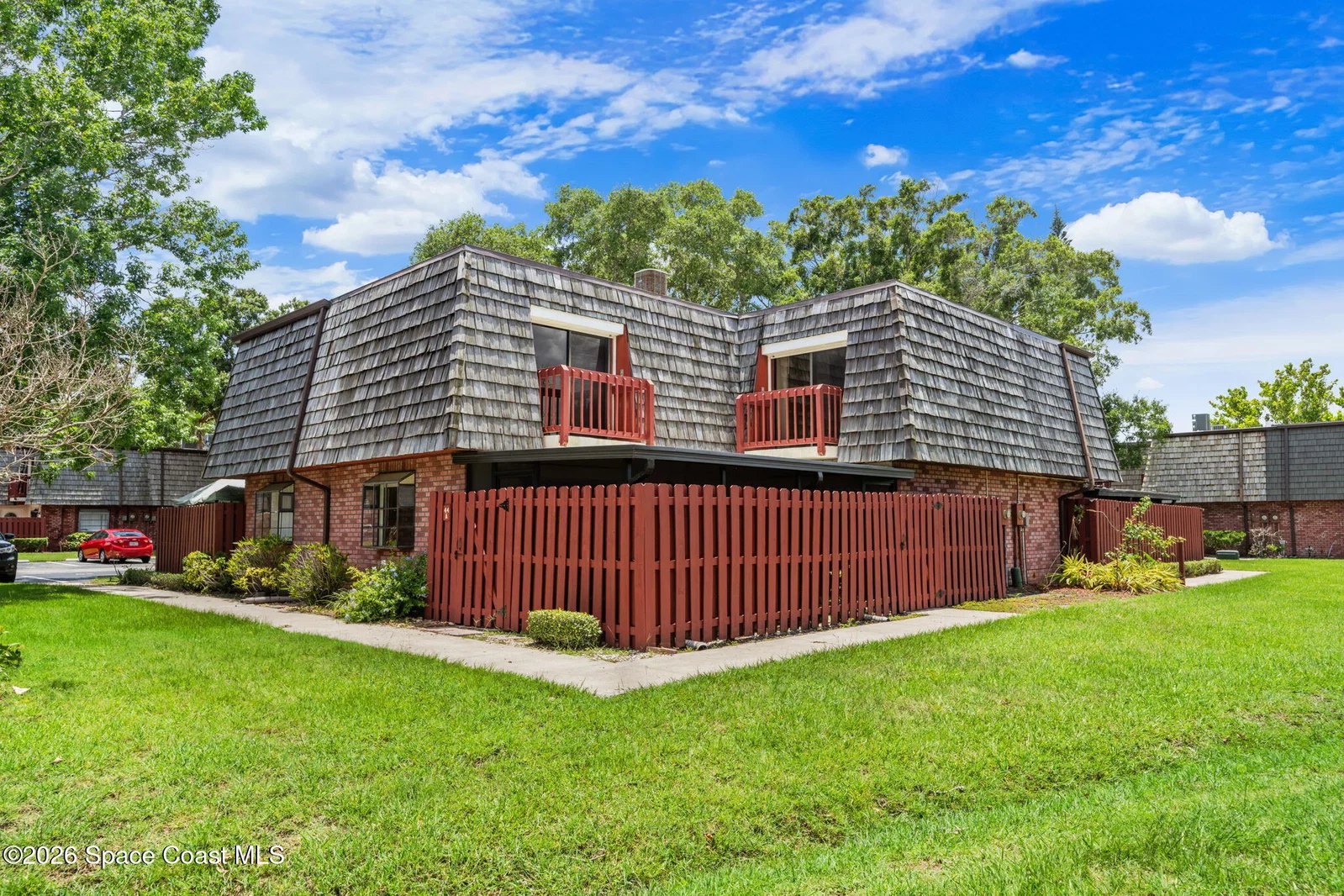
44 Piney Branch Way: A Melbourne, FL Townhome Under $150K in Chateau in the Pines

Can you still buy a townhome in Melbourne, FL for under $150,000?

Yes. 44 Piney Branch Way in Chateau in the Pines is a 2-bedroom, 2.5-bath townhome listed at $149,900, and each bedroom has its own bathroom and balcony.

Two-story townhomes at Chateau in the Pines, 44 Piney Branch Way, Melbourne FL
View More
Oct. 22, 2026

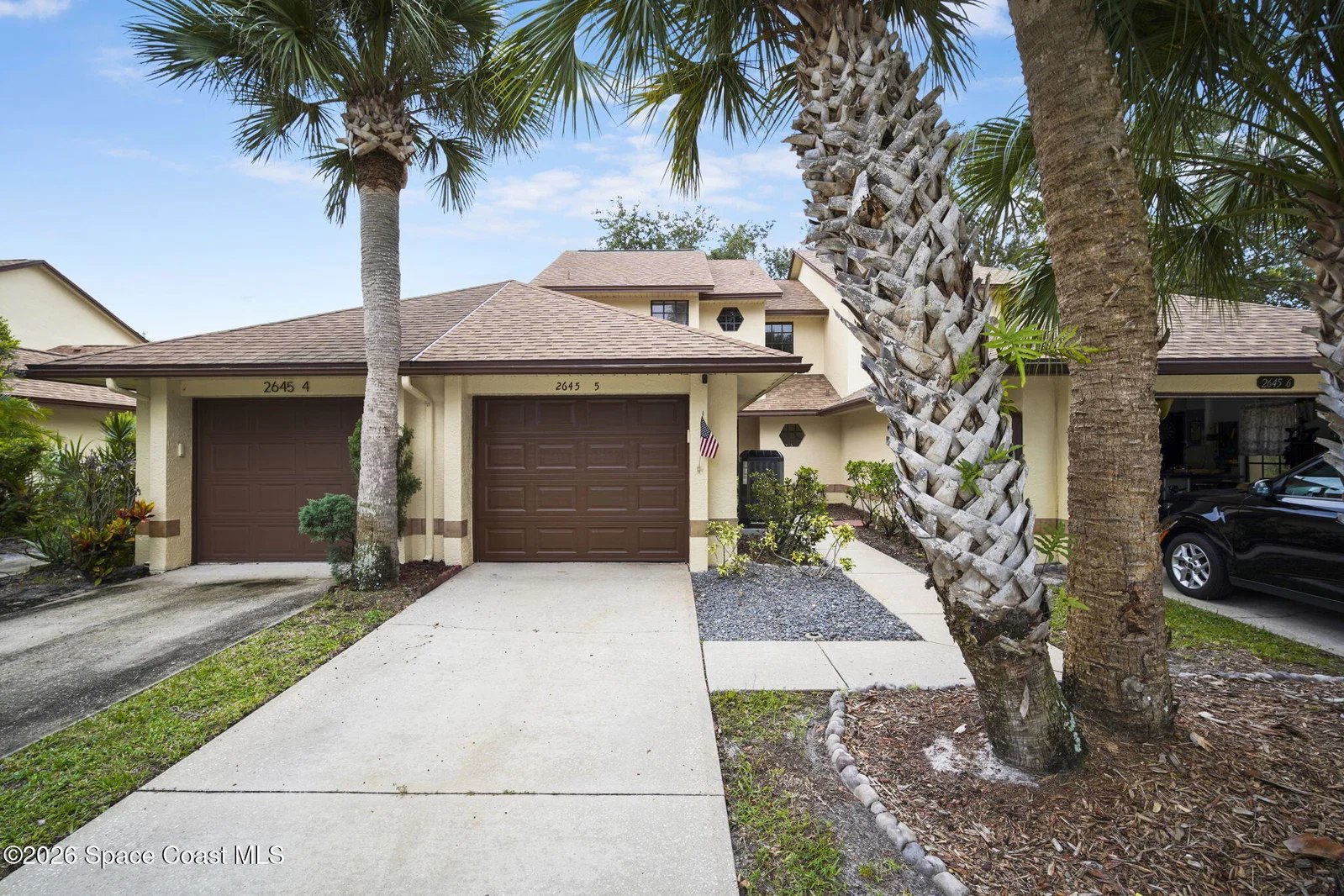
2645 Elliot Way #5: A Weston Park Townhome in Melbourne, FL Under $270K

Is there a move-in ready townhome in Melbourne, FL under $270,000?

Yes. 2645 Elliot Way #5 in Weston Park is a 2-bedroom townhome with a 1-car garage listed at $269,900, with a 2022 roof and a brand new 2026 HVAC system already done.

Front exterior and 1-car garage of 2645 Elliot Way #5, a Weston Park townhome in Melbourne FL
View More
Oct. 22, 2026

Where to Live for a Cape Canaveral Space Force Job

View More
Oct. 22, 2026

Where to Live in Merritt Island, FL: North, Central & South Map Tour

View More