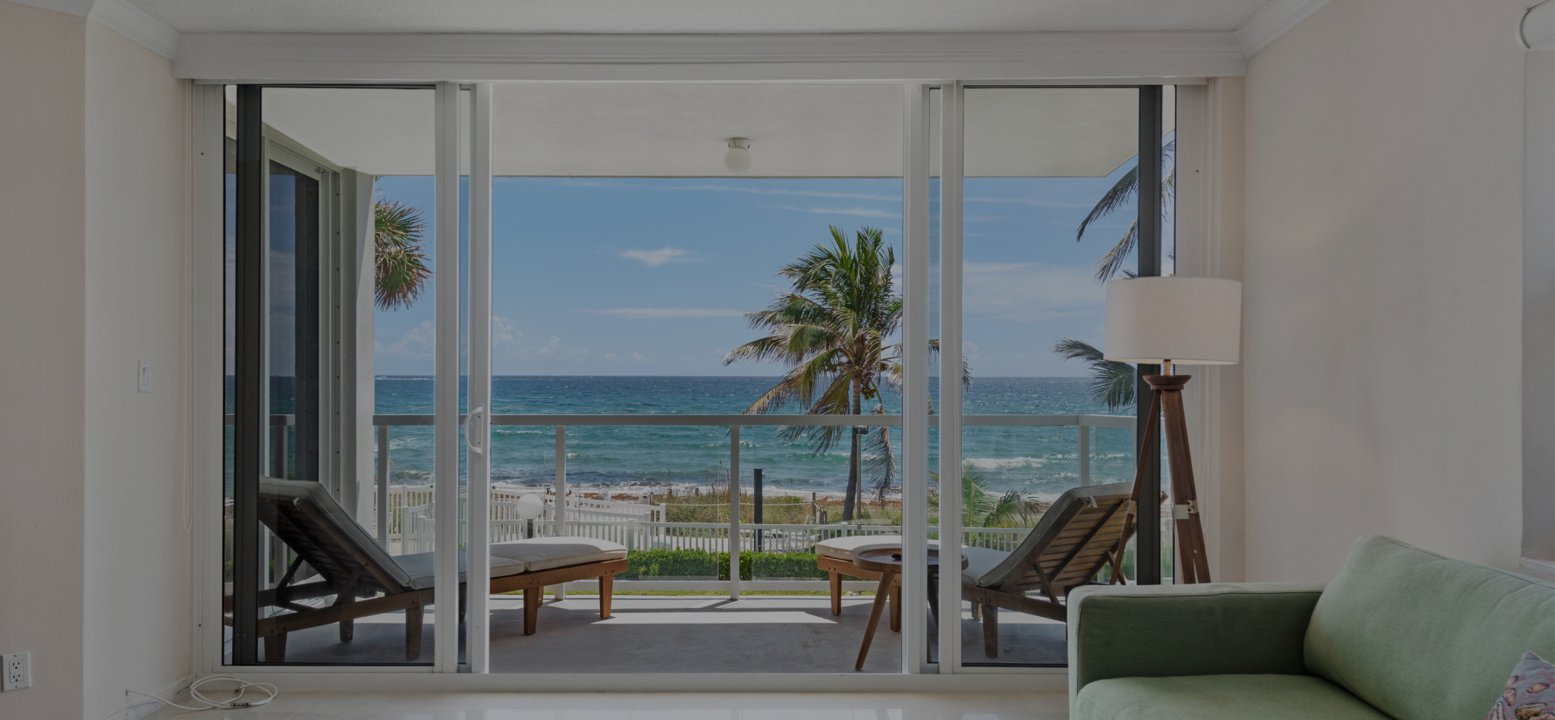
Moving to Florida from the Northeast
If you are moving to Brevard County from New York, New Jersey, Connecticut, Massachusetts or Pennsylvania, most of what you know about buying a house still applies. Contract, inspection, appraisal, walkthrough: same shape. What changes is everything around the house: the tax math, the insurance math, the construction, and a calendar that runs backward from the one you have lived by. Nothing below is tax or legal advice; these are the published rules, and a CPA or attorney should confirm anything specific to your situation.
No state income tax, and what it does and does not save
Article VII, Section 5 of the Florida Constitution bars the state from taxing the income of natural persons who are residents, and caps estate and inheritance taxes at the amount creditable against the federal tax. That is real, and narrower than people expect. It does not eliminate property tax: Brevard's 2025 total millage in the unincorporated county was 12.3894 mills, roughly $1.24 per $100 of taxable value, and city rates differ.
It also does not end your old state's interest in you. New York treats you as a resident if you are domiciled there, or if you maintain a permanent place of abode in the state for substantially all of the taxable year and spend 184 days or more there. Keeping the northeast house and living in it half the year can undo the premise of the move, so talk to your CPA before closing, not after.
Becoming a Florida resident: the paperwork, in order
- Declaration of Domicile. Florida Statute 222.17 lets you file a sworn statement with the clerk of the circuit court declaring Florida your permanent home and, if you keep other residences, declaring this one your predominant and principal home. Inexpensive, and dated evidence of intent.
- Driver license within 30 days of establishing residency, per the Florida Department of Highway Safety and Motor Vehicles.
- Vehicles within 10 days. Title and register vehicles, vessels and mobile homes, with coverage written through an agent licensed in Florida.
- Voter registration in Brevard.
- Homestead by March 1, filed with the Brevard County Property Appraiser.
One requirement catches northeast buyers off guard: Brevard asks for a letter from your former county or state confirming you no longer receive a residency-based tax benefit there. A STAR credit in New York or a residential exemption in Massachusetts has to be unwound in writing, so keep the paper.
Homestead exemption and Save Our Homes
You must hold title and occupy the property as your permanent residence as of January 1, and file by March 1 of that year. The exemption comes in two pieces. The first $25,000 comes off assessed value and applies to every taxing authority on your bill. The second, $26,411 for 2026, applies to assessed value above $50,000 and only to some authorities. Amendment 5 took effect January 1, 2025 and indexes that second piece to inflation: a flat $25,000 became $25,722 for 2025 and $26,411 for 2026.
| Item | 2026 figure | Notes |
|---|---|---|
| First homestead exemption | $25,000 | Applies to every taxing authority on the bill |
| Additional homestead exemption | $26,411 | Assessed value above $50,000; some authorities only; indexed to CPI |
| Total exemption available | $51,411 | Requires January 1 ownership and occupancy |
| Save Our Homes annual cap | 3 percent or CPI, whichever is lower | Homesteaded property only |
| Non-homestead assessment cap | 10 percent per year | Second homes, rentals, land; not every levy; resets on sale |
| Maximum portable Save Our Homes benefit | $500,000 | Florida to Florida only, filed on form DR-501T |
| Portability window | New homestead by January 1 of the third tax year | Counted from the year the prior homestead was abandoned |
| Annual filing deadline | March 1 | Same date for homestead and portability |
Save Our Homes is the piece that compounds. Once homestead is in place, assessed value cannot rise more than 3 percent or the change in the Consumer Price Index, whichever is lower, in a year. Recapture runs the other way: even if market value is flat, the property appraiser must raise assessed value by the allowable percentage until it catches up.
Here is the trap: the cap resets when the property sells. A seller who has owned since 2011 may be paying on an assessed value far below what you will pay, so their bill tells you nothing about yours. Ask the property appraiser's office for an estimate at your purchase price, and read how Brevard County property taxes work before you write an offer.
Portability carries up to $500,000 of accumulated Save Our Homes benefit to a new Florida homestead on form DR-501T, provided that homestead is established by January 1 of the third tax year after the old one was abandoned. Be clear who that helps: your second Florida house. Arriving from Connecticut you have nothing to port, so plan on full freight in year one. Mechanics are in the Florida homestead exemption guide.
How the assessment and the bill work
Florida runs on a January 1 snapshot: market value becomes assessed value after caps, assessed becomes taxable after exemptions, and taxable value times the millage is your tax.
| Date | What happens |
|---|---|
| January 1 | Assessment date. You must own and occupy to qualify for that year. |
| March 1 | Deadline to file homestead and portability. |
| On or about November 1 | Tax statements mailed. Pay in November for a 4 percent discount. |
| December | 3 percent discount. |
| January | 2 percent discount. |
| February | 1 percent discount. |
| March | No discount. Discounts are set by postmark. |
| April 1 | Taxes delinquent. A minimum mandatory charge of 3 percent is added. |
Homeowners insurance and wind mitigation
This is the line that changes a northeast budget the most. For the period ending September 30, 2025, the average Brevard County homeowners premium including wind coverage was $3,560, and the average condominium unit owner premium including wind was $1,445, per the Florida Office of Insurance Regulation stability report of January 2026. Premiums swing on insured value, deductible, roof age and distance from the water.
- A separate hurricane deductible. Insurers must offer $500, 2 percent, 5 percent and 10 percent of the dwelling limit, applied on a calendar-year basis to hurricane losses. On a $500,000 dwelling limit, 2 percent means $10,000 out of pocket before anything is paid.
- Wind mitigation credits. An inspector completes the Uniform Mitigation Verification Inspection Form, OIR-B1-1802, covering roof covering, roof deck attachment, roof-to-wall connections, secondary water resistance and opening protection. It is valid up to five years if nothing material changes, and since October 1, 2023 residential property insurers must publish their mitigation discounts on their own websites.
The market has moved since the 2022 and 2023 reforms: seventeen new companies approved to write residential property in Florida, and for policies effective 2024 or later, 39 requested a rate decrease and 100 requested no change. Get quotes during your inspection period, not after. More is in the Brevard hurricane preparation and insurance guide.
Flood zones and elevation certificates
Flood is not covered by a homeowners policy anywhere, including here. It is a separate National Flood Insurance Program or private policy, and a new NFIP policy generally carries a 30-day waiting period unless bought in connection with a loan closing, when it can be effective at closing. Roughly 40 percent of NFIP claims come from outside the mapped high-risk zones, so "not in a flood zone" describes a requirement, not a risk level.
Brevard County's Floodplain Administration keeps elevation certificates on file for structures permitted within roughly the last decade, researches older ones back to 1992 for a fee, and issues base flood elevation determinations. It has been in the program since 1972 and administers the Community Rating System, which reduces premiums in the unincorporated county. Before going firm on a barrier island house in Satellite Beach or anything near the river, pull the elevation certificate and get a flood quote in writing. Start with flood zones in Brevard County.
Hurricane season and what preparation really involves
The Atlantic season runs June 1 through November 30, with the climatological peak on September 10 and most activity between mid-August and mid-October. That is six months of watching, and in a typical year nothing lands here. Preparation is a checklist you build once and maintain.
- Know your evacuation zone before you need it and sign up for AlertBrevard. Brevard County Emergency Management is at (321) 637-6670.
- Shutters or impact glass. Impact glass costs more up front and you never handle it again; panels are cheaper and you install them in the heat.
- Power: generator or battery, a safe way to connect it, and fuel you rotate. Supplies bought in May, not the day a cone appears on the map.
- Bind insurance early in your transaction. Availability tightens as the season progresses.
Concrete block versus frame, and what a Florida house lacks
Most single story houses in Brevard have concrete block exterior walls on a poured slab, stucco outside, furring and drywall inside. Two story houses are frequently block below and wood frame above. Neither is a verdict on quality: both are built to the Florida Building Code, and wind performance comes from the whole system, roof deck attachment, roof-to-wall connectors and protected openings, more than from the wall material. Insurance rating does distinguish masonry from frame, so it shows up in the premium. With new construction, the builder can tell you exactly which wall assembly and opening protection you are buying.
- No basement. Slab on grade, water table close to the surface. What you stored downstairs now lives in the garage or a brutally hot attic, and northeast movers routinely arrive with more than the house can hold.
- No mudroom, no oil tank, no snow blower. The winter infrastructure has no use here and costs money to move.
- The air conditioner is the mechanical heart of the house. Ask its age the way you would ask about a boiler, and budget for annual service.
- A screened enclosure or lanai instead of a deck. Screen is a consumable.
Humidity and the seasonal rhythm
June through September is hot and humid, with afternoon thunderstorms most days and air conditioning running nearly around the clock. Late October through April is the payoff: summer is the indoor season here the way January is up there. Do not shut the air off when you travel, because humidity control matters more than temperature. East of US 1, and especially on the barrier island, the ocean breeze takes real heat out of an August afternoon, while salt air takes real life out of hinges, hardware and outdoor condensers.
Timing the move around the northeast selling season
You are working two calendars and they do not line up. The northeast listing season is front loaded: inventory goes on in March and April, with the strongest buyer attention before the summer slowdown and again in early fall.
Florida's calendar is fixed: own and occupy by January 1, file by March 1. A closing in September or October puts you in the house well before January 1, and the exemption plus the Save Our Homes cap start working for the coming tax year. A closing in February means eleven months of ownership before any of it applies, with your Save Our Homes base set a year later than it needed to be.
So: list up north in early spring, target a Brevard closing in late summer or early fall, and be in the house before the holidays. If the northeast sale runs long, a short-term rental here beats buying the wrong house in the wrong part of the county. The Brevard County relocation overview and the relocation hub cover how the towns differ.
Where you are coming from
New York
Long Island, Westchester and the Hudson Valley send the largest share. The pattern is a two step: sell a house carrying a property tax bill that would buy a car every year, then find part of the saving spent back on insurance. Most come out ahead, just not by as much as the headline implies.
New Jersey
New Jersey carries the highest effective property tax rate in the country, so property tax is the largest single line change. Run insurance beside it before assuming the difference is all savings.
Connecticut
Fairfield County and greater Hartford, heavy on remote workers. Connecticut effective property tax rates run roughly 1.17 to 1.91 percent by planning region, and its municipal motor vehicle tax has no Florida equivalent.
Massachusetts
Cape Cod and South Shore buyers find the closest lifestyle overlap: water access, boats, a beach town rhythm. The adjustment is less the water than the heat calendar.
Pennsylvania
Bucks County, the Main Line and the Lehigh Valley feed a steady stream. The property tax change is usually modest and the insurance change large, so build both lines in before deciding.
I made this move
I moved from Rhode Island to the Space Coast in 2022. Most of the relocation buyers I work with come from the Northeast, and we start in the same place: the same winters, the same tax bills, the same questions about insurance.
Talk it through before you list up north
The best time to call is three to six months before you plan to sell, while the sequencing is still flexible. Nichole and I will walk through your timeline, your must-haves and the Brevard towns most likely to fit. Most people land close to, but not exactly, where they expected. Call or text (321) 212-7676.
Rachel Langley, REALTOR, Blue Marlin Real Estate